Day 0 - The Beginning
One day, I decided to go on vacation without a destination, without a plan... The important thing was to escape from the stress of work and the hustle of a small town like Ortona. About a month before, I met a friend who, as I talked to him about the plan to "get away" for a few days, convinced me to consider the idea of the Dolomites. My initial thought was to go abroad, to learn about new cultures and habits, different cuisines, and the mentality of the small villages and towns scattered across the continent. However, staying within my country wouldn't have been disappointing.
So, I decided to research Braies, a small village, highly recommended by my friend Gaetano. A whole new world opened up to me... A stunning lake, a village worthy of the best Italian towns, a mountain range considered one of the most beautiful in the world, and guaranteed hospitality. I seized the opportunity and immediately checked the Trenitalia website to see if there were available travel options on my intended departure dates. Confirming availability, I began searching for a hotel/hostel to spend my 4 days in complete relaxation.
I sent various emails, contacted several accommodations, and all of them responded politely, with a touch of German accent. One particular lodging intrigued me, the "Trenker Luis," a small two-story apartment located in the district of St. Veit, 3 km from Lake Braies and 15 minutes from Ferrara, a little hamlet at 1200 meters above sea level.
I chose the option of a single room with payment upon arrival since my four days would not be spent relaxing, but rather filled with excursions and walks to admire the majesty of the Dolomites.
The eagerly awaited day arrived. Packing turned out to be more challenging than anticipated. I packed what was necessary for four days of excursions and set out for the train station in Pescara at night. It would take 12 hours before I reached Villabassa, the nearest station to Braies. This was because I had to make four transfers, as connections to Trentino are not very straightforward. I arrived around 4 in the afternoon and could already sense that I was in a completely different world: the history and tradition of the Germans had taken over, creating an evocative and characteristic village. I took bus number 442 and, after about fifteen minutes, I found myself in front of the apartment.
I got off and looked around: I saw nothing but mountains and scattered cottages here and there. I immediately sensed that I had made the right choice. Upon arriving at the door, a man in his fifties presented himself, speaking Italian with a touch of German. We exchanged introductions, and he handed me the room keys. Without waiting further, I rushed to take a shower and then unpacked my suitcase. I charged my phone and GoPro and relaxed on the small balcony that offered a breathtaking view, enjoying a cigar given to me by my friend Mario for the occasion.
Considering the time, which was already too late to go out, I took a walk in the nearest village: Ferrara di Braies. Very charming and full of character, it mesmerized me with the beauty of its landscape and well-kept architecture. It genuinely felt like being in Germany rather than Italy. I bought something for dinner at the local market and retraced my steps back to the hotel.
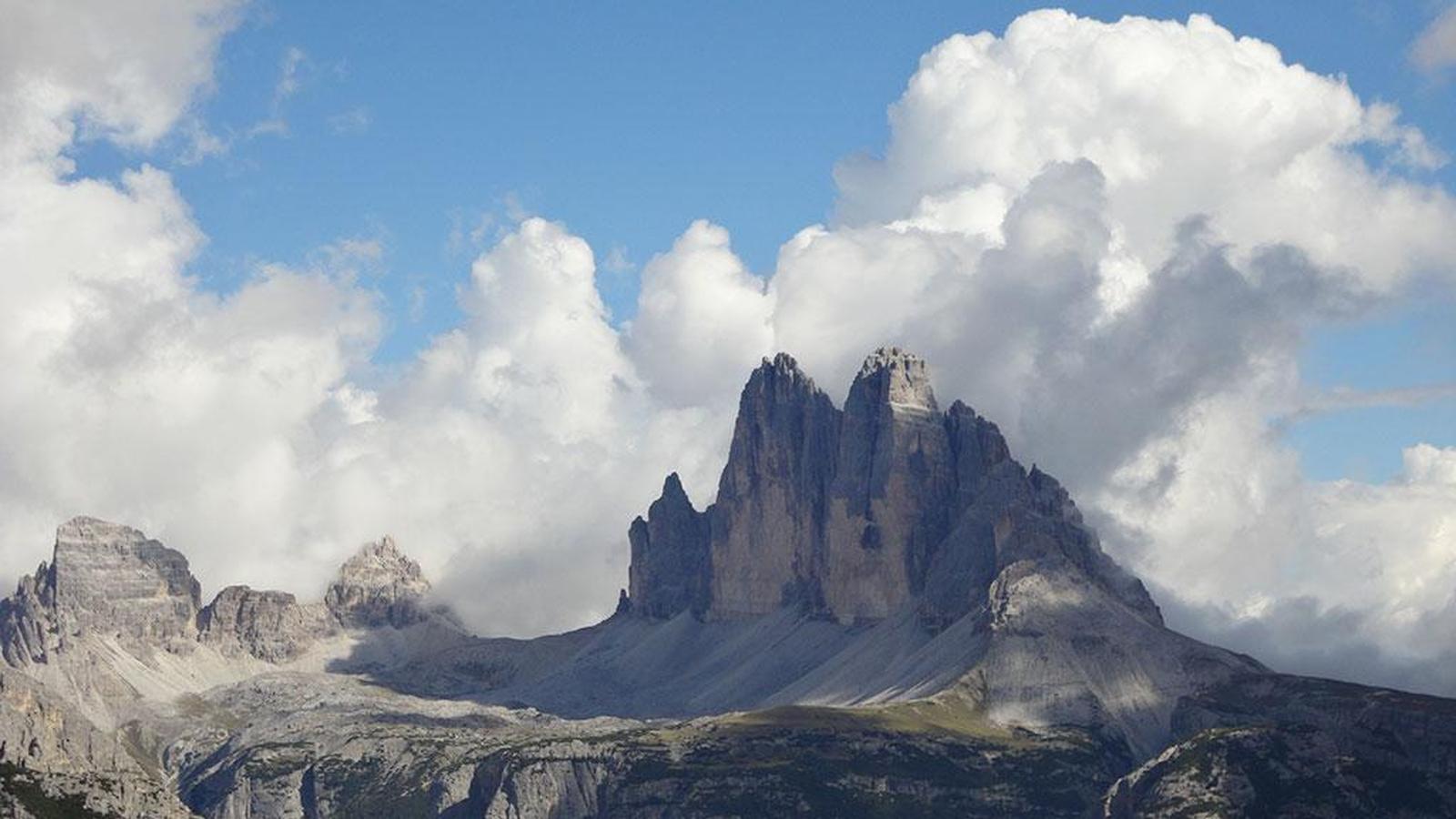
Once there, I immediately planned these four mountain days. As we talked about what to do and what not to do, I was given a map of the area and all possible itineraries, from the easiest to the most challenging. I decided that the next day, I would embark on an excursion to the Vallandro Peak (2839m). Renowned for its 360° view of the surrounding mountains, foremost among them, the Tre Cime di Lavaredo.
I went to bed, marking the route on the map to follow the next day. As I waited for sleep to come, I passed the time with a good book by Dan Brown.
Day 1 - Mt. Specie
The alarm clock rang at 6:00 the next morning, and I woke up excited and curious about the journey ahead. I prepared the GoPro, camera, phone, and everything needed for a hike. I entered the dining room, where a delicious and hearty breakfast awaited me, including fruit, cappuccino, toast, and various juices, all available buffet-style. I stocked up on protein and, with my backpack on, I got ready for a long walk. I left the accommodation and headed towards Ferrara; in fact, trail number 37 starts from a small road adjacent to the tourist information point in the village. After about 20 minutes, I found myself on the trail, clearly marked by signs along the dirt road.
First goal: Ponticello.
I continued along the well-marked path indicated by the signs along the dirt road, delving into lush vegetation reminiscent of a Monet masterpiece. After about 45 minutes, I reached a crossroads where the road split in two: one continued to climb on the right, and a small path ran alongside a small stream on the left. I took out the map and the leaflet with directions given to me at the information point, discovering that the small anonymous path on the left was the "Nature Trail."
I ventured into it and immediately noticed an information board announcing the presence of 9 distinct stations, each with its own information panel. These panels discussed the local flora and fauna, the small river flowing on the left, and the terrain's conformation. The detour lasted about twenty minutes, after which I rejoined the main trail I had left a few hundred meters earlier.
After about half an hour of walking, the road hugged the street and led onto a small path flanked by trees on the right, with the main road on the left. Another 20 minutes brought me to the first stop of this journey: Ponticello.
The clearing immediately presented itself with a parking lot allowing hikers to continue on foot, and buses passing through from Braies to Prato Piazza (1993m above sea level) also stopped here. The greenery reigned supreme. To reach the next destination, I took a path that started after the little bridge (hence the name of this place). A steep climb accompanied by a high degree of slope led me up to Prato Piazza. The entire journey took about an hour. I stopped in this location for about half an hour and quickly understood the reason behind its name: an expanse of grass framed by a considerable mountain range. I continued along trail 37 until I reached the Vallandro Refuge (2040m above sea level). From there, two paths diverged to ascend to Mt. Specie: the first, much more complicated and suitable for experienced hikers, started just behind the refuge, while the other, very well-marked with signs along the way, was more panoramic but longer.
I opted for the second option and embarked on the ascent, where the view was absolutely fantastic. I walked for at least an hour until I reached a plateau where I could see the cross on Monte Specie. After another 20 minutes, I reached the summit. The scene that unfolded before me was otherworldly: a 360° view of the Dolomite mountains, with the Tre Cime di Lavaredo prominently in the foreground.
I took some obligatory photos and began the descent towards the alternative trail for experienced hikers. I returned to Prato Piazza in about an hour and a half and caught the bus that took me back to the accommodation. Upon arrival, a refreshing shower awaited me, along with tea and a good cigar. I planned the next day's itinerary, lay down, and awaited the next day to visit Lake Braies.
Day 2 - Lake Braies
The alarm went off at dawn once again. I got ready and went down for the usual protein-rich breakfast. I grabbed the map while having breakfast to decide on the day's itinerary. Beside me, there was a man in his fifties sitting with his wife, both very polite. His name was Alfredo, and he was from Venice. They were there to spend carefree moments together. He told me that he lived in Venice. After introductions and a pleasant conversation, he suggested I go to Dobbiaco, a village not too far from where we were (about half an hour by bus).
I checked Google and prepared to catch the bus. The bus services in Trentino are so efficient that waiting times never exceeded three minutes. Impressive. After about 40 minutes, I found myself at the Dobbiaco terminal. It was around 10:00, and I still had to figure out how to spend the entire day. I went to the bar for yet another coffee and saw a group of elderly gentlemen, all in their seventies, deeply immersed in gossip and scrutinizing anyone who passed by. I stopped and asked them. The result was that I ended up sitting with them, enjoying a beer offered by the gentlemen (at 10 in the morning!).
The most exuberant gentleman told me that it was worth visiting Lake Dobbiaco, which wasn't very far away and would make for an excellent day trip. I didn't need to be told twice. I paid for a beer for the gentlemen at the bar counter and set off for the lake. The road was normal for about 2 km before turning into a dirt path. However, it was still relatively easy to navigate, and the end result was rewarding. The beauty couldn't compare to Lake Braies, but it was still a nice place to spend a few hours. It took about 30 minutes to circumnavigate the lake. I finished the walk and made my way back to the village.
Dobbiaco was lovely, distinctive. It's the kind of village where one would want to spend their life due to the gentle and peaceful atmosphere it offers. It was 6:00 PM, and it was time to return to the hotel. I took the bus back and arrived around 7:00 PM. After a shower, I went down to eat. I went to bed at 11:00 PM and fell asleep. The next day, I would take the train back to Ortona, my beloved hometown.